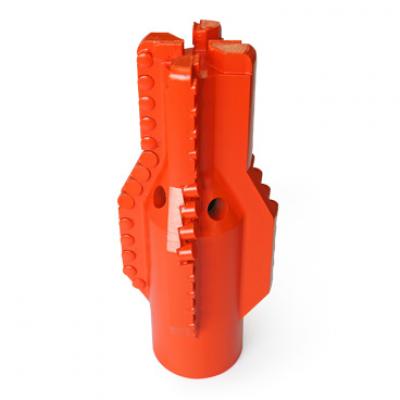

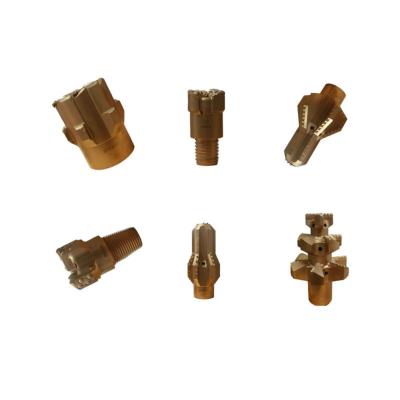
PDC drill bit is used for soft to medium-hard rock formations (f=1–10), mainly in geological exploration, with polycrystalline diamond compacts brazed onto tungsten carbide matrix; some advanced models suit hardness level 10 rocks, but avoid fractured or complex formations.
More
Product Name:drill bit
Product Model:
Place of Origin: Shanxi, China
A kilometer drilling rig bit is a key tool used for deep-hole drilling (depths reaching up to the kilometer level). It is widely applied in fields such as geological exploration, mine exploitation, oil and gas drilling, and engineering surveying. Its performance directly affects drilling efficiency, cost, and safety.
2. Types of Drill Bits and Applicable Scenarios
Depending on the formation and drilling requirements, kilometer drilling rig bits can be divided into the following categories:
Carbide Drill Bits
Features: Lower cost, suitable for medium-hard and softer formations (e.g., sandstone, mudstone).
Limitations: Lower wear resistance, requiring frequent replacement during deep-hole drilling.
Diamond Drill Bits
Features: Super-hard materials, suitable for hard and abrasive formations (e.g., granite, basalt), long service life.
Types: Natural diamond bits, PDC (Polycrystalline Diamond Compact) bits.
Advantages: High-speed drilling, reduced tripping frequency.
Roller Cone Bits
Features: Crushes rock through rolling cutters, suitable for soft to medium-hard formations.
Application: Commonly used in oil drilling, but gradually replaced by PDC bits in deep-hole drilling.
Impact Rotary Bits
Features: Combines impact and rotation, suitable for hard and fractured formations (e.g., gravel layers, fractured rock zones).
3. Technical Requirements and Challenges
Deep drilling to the kilometer level places higher demands on drill bits:
High Temperature and Pressure Resistance: Formation temperatures at depth can exceed 200°C; materials must be thermally stable.
Impact and Wear Resistance: Complex formations (e.g., fault zones, karst) can easily damage bits.
Cuttings Removal Efficiency: Difficulty in removing rock debris in deep holes requires optimized hydraulic structures in the bit design.
Guidance and Stability: Directional drilling requires anti-deviation designs (e.g., screw motors integration).
4. Current Domestic and International Technology Development
Leading International Companies:
Smith Bits (PDC bits), ReedHycalog (roller cone bits), and Mitsubishi Materials (carbide bits) from the U.S.
Technological directions: nano-coatings, self-grinding designs, smart bits (integrated sensors for wear monitoring).
Domestic Development:
Companies under CNPC and Sinopec have developed deep-well bits, but high-end markets still rely on imports.
Domestic PDC bits have achieved substitution in certain areas (e.g., coal seam drilling).
5. Selection Recommendations
Selecting a kilometer drilling rig bit requires consideration of the following factors:
Formation Lithology: Rock hardness, abrasiveness, and integrity (e.g., presence of gravel).
Drilling Objective: Core drilling (requires high-precision core samples) or full-face drilling (fast hole creation).
Equipment Parameters: Torque, rotational speed, and pump pressure capacity of the rig.
Cost Control: Initial purchase cost vs. bit life (cost per meter drilled).
6. Maintenance and Optimization
Regular Inspection: Monitor bit wear (e.g., chipped cutters, bearing failure).
Parameter Adjustment: Optimize weight on bit, RPM, and mud flow rate based on formation changes.
New Technology Application: Use air down-the-hole (DTH) hammer bits to improve drilling efficiency in hard rock.
-
![PDC drill bit]()
-
![fishing bit]() The PDC fishing bit features a pilot-type stepped design with guiding and cutting sections, suitable for retrieving stuck tools in directional drilling, available in multiple sizes.More
The PDC fishing bit features a pilot-type stepped design with guiding and cutting sections, suitable for retrieving stuck tools in directional drilling, available in multiple sizes.More -
![PDC reamer]() PDC Reamer is a high-performance drilling tool used in oil, gas, mining, and engineering for efficient hole enlargement in hard formations, available in multiple sizes and blade types.More
PDC Reamer is a high-performance drilling tool used in oil, gas, mining, and engineering for efficient hole enlargement in hard formations, available in multiple sizes and blade types.More