

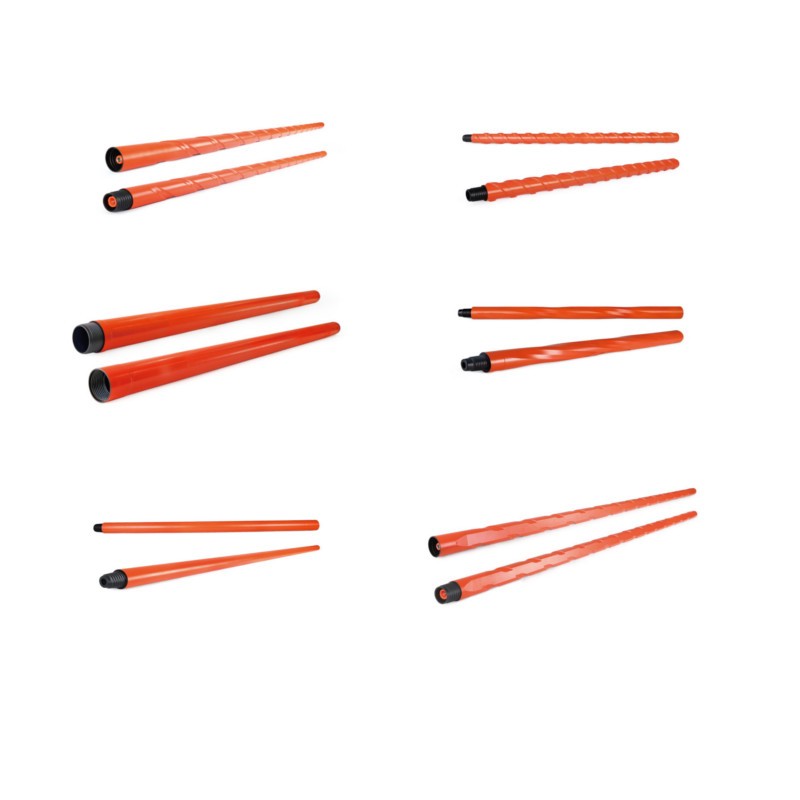
directional drill pipe
directional drill pipe for directional drilling rig
Product Name:drill pipe
Product Model:
Place of Origin: Shanxi, China
Drilling Rods for Directional Drilling Rigs
Drill pipes used in directional drilling rigs are a critical component in directional drilling operations, such as horizontal directional drilling, extended reach drilling, and multi-lateral wells. These drill pipes must not only perform the functions of conventional drill pipes but also meet higher mechanical and operational requirements due to the complex well trajectories.
1. Basic Functions of Directional Drill Pipes
Similar to conventional drill pipes, the main functions of directional drill pipes include:
Transmitting Power: Delivering torque and weight-on-bit from the surface to the bottomhole assembly (BHA) and drill bit.
Conveying Drilling Fluid: Transporting drilling mud through the hollow body to cool the bit, carry cuttings to the surface, and stabilize the wellbore.
Trajectory Control: In directional drilling, the drill pipe works in conjunction with downhole motors (such as positive displacement motors or steerable motors) to precisely control the well path.
2. Structural Characteristics of Directional Drill Pipes
While the structure of directional drill pipes is generally similar to that of conventional ones, their design and material selection are more rigorous to adapt to complex downhole conditions:
1. High-Strength Steel Materials
Typically made from high-strength alloy steel with API grades such as S135, V150, or even higher performance alloys.
In some deep or high-temperature, high-pressure wells, aluminum alloy or composite material drill pipes may be used to reduce weight and improve corrosion resistance.
2. Anti-Torque and Anti-Fatigue Design
Reinforced thread connections to reduce stress concentration.
Surface treatments such as shot peening and heat treatment are applied to enhance fatigue resistance.
3. Special Thread Types
Common thread types include:
API IF (Internal Flush)
NC (Numeric Connection, e.g., NC38, NC46)
FH (Full Hole)
The NC series is widely used in directional and horizontal wells due to its high connection strength and sealing performance.
3. Operational Characteristics of Directional Drill Pipes
Item Description
Well Trajectory Drill pipes must withstand greater lateral forces and bending stresses in curved sections
Friction Resistance Increased friction with the wellbore in curved sections leads to wear and fatigue
Torque Transmission Torque efficiency decreases in long horizontal sections, requiring higher pipe strength
Tripping Difficulty Risk of sticking or thread disengagement increases during tripping in directional wells
4. Special Types of Directional Drill Pipes
1. Heavy Weight Drill Pipe (HWDP)
Thicker middle section to provide partial weight-on-bit, reducing the need for drill collars.
Reduces contact stress between the drill pipe and wellbore.
2. Spiral Grooved Drill Pipe
Spiral grooves on the outer surface reduce contact area with the wellbore, lowering friction resistance.
Commonly used in horizontal and extended reach wells.
3. Non-Magnetic Drill Pipe
Used near measurement instruments (e.g., MWD, LWD) to avoid magnetic interference.
Made from stainless steel or nickel-based alloys.
5. Factors in Drill Pipe Selection for Directional Wells
Well Depth and Inclination Angle
Formation Conditions (hardness, corrosiveness)
Drilling Fluid Properties
Drilling Rig Capacity (maximum torque, lifting force)
Complexity of Well Trajectory
Fatigue Life and Maintenance Cost of Drill Pipe
6. Common Issues and Maintenance Recommendations
Common Issues:
Fatigue Cracks: Often occur at the junction between the tool joint and the pipe body.
Thread Disengagement: Caused by excessive torque or improper connection.
Severe Wear: Especially in horizontal sections and doglegs.
Corrosion: Accelerated by sulfur, chlorine, or other corrosive components in the drilling fluid.
Maintenance Recommendations:
Conduct magnetic particle inspection or ultrasonic testing after each tripping operation.
Regularly inspect thread wear and sealing performance.
Avoid bending, moisture, and corrosive environments during storage.
Use specialized thread compound to prevent galling and sticking.
7. Relevant Standards
API SPEC 5DP: Specification for Drill Pipe (American Petroleum Institute)
ISO 11960: Steel Pipes for Petroleum and Natural Gas Industries
NACE MR0175: Material Standard for Resistance to Sulfide Stress Cracking (applicable to H₂S environments)
Selecting high-strength, fatigue-resistant, and low-friction drill pipes.
Strengthening inspection and maintenance routines.
Optimizing the drill string configuration based on well conditions.
Product Model:
Place of Origin: Shanxi, China
Drilling Rods for Directional Drilling Rigs
Drill pipes used in directional drilling rigs are a critical component in directional drilling operations, such as horizontal directional drilling, extended reach drilling, and multi-lateral wells. These drill pipes must not only perform the functions of conventional drill pipes but also meet higher mechanical and operational requirements due to the complex well trajectories.
1. Basic Functions of Directional Drill Pipes
Similar to conventional drill pipes, the main functions of directional drill pipes include:
Transmitting Power: Delivering torque and weight-on-bit from the surface to the bottomhole assembly (BHA) and drill bit.
Conveying Drilling Fluid: Transporting drilling mud through the hollow body to cool the bit, carry cuttings to the surface, and stabilize the wellbore.
Trajectory Control: In directional drilling, the drill pipe works in conjunction with downhole motors (such as positive displacement motors or steerable motors) to precisely control the well path.
2. Structural Characteristics of Directional Drill Pipes
While the structure of directional drill pipes is generally similar to that of conventional ones, their design and material selection are more rigorous to adapt to complex downhole conditions:
1. High-Strength Steel Materials
Typically made from high-strength alloy steel with API grades such as S135, V150, or even higher performance alloys.
In some deep or high-temperature, high-pressure wells, aluminum alloy or composite material drill pipes may be used to reduce weight and improve corrosion resistance.
2. Anti-Torque and Anti-Fatigue Design
Reinforced thread connections to reduce stress concentration.
Surface treatments such as shot peening and heat treatment are applied to enhance fatigue resistance.
3. Special Thread Types
Common thread types include:
API IF (Internal Flush)
NC (Numeric Connection, e.g., NC38, NC46)
FH (Full Hole)
The NC series is widely used in directional and horizontal wells due to its high connection strength and sealing performance.
3. Operational Characteristics of Directional Drill Pipes
Item Description
Well Trajectory Drill pipes must withstand greater lateral forces and bending stresses in curved sections
Friction Resistance Increased friction with the wellbore in curved sections leads to wear and fatigue
Torque Transmission Torque efficiency decreases in long horizontal sections, requiring higher pipe strength
Tripping Difficulty Risk of sticking or thread disengagement increases during tripping in directional wells
4. Special Types of Directional Drill Pipes
1. Heavy Weight Drill Pipe (HWDP)
Thicker middle section to provide partial weight-on-bit, reducing the need for drill collars.
Reduces contact stress between the drill pipe and wellbore.
2. Spiral Grooved Drill Pipe
Spiral grooves on the outer surface reduce contact area with the wellbore, lowering friction resistance.
Commonly used in horizontal and extended reach wells.
3. Non-Magnetic Drill Pipe
Used near measurement instruments (e.g., MWD, LWD) to avoid magnetic interference.
Made from stainless steel or nickel-based alloys.
5. Factors in Drill Pipe Selection for Directional Wells
Well Depth and Inclination Angle
Formation Conditions (hardness, corrosiveness)
Drilling Fluid Properties
Drilling Rig Capacity (maximum torque, lifting force)
Complexity of Well Trajectory
Fatigue Life and Maintenance Cost of Drill Pipe
6. Common Issues and Maintenance Recommendations
Common Issues:
Fatigue Cracks: Often occur at the junction between the tool joint and the pipe body.
Thread Disengagement: Caused by excessive torque or improper connection.
Severe Wear: Especially in horizontal sections and doglegs.
Corrosion: Accelerated by sulfur, chlorine, or other corrosive components in the drilling fluid.
Maintenance Recommendations:
Conduct magnetic particle inspection or ultrasonic testing after each tripping operation.
Regularly inspect thread wear and sealing performance.
Avoid bending, moisture, and corrosive environments during storage.
Use specialized thread compound to prevent galling and sticking.
7. Relevant Standards
API SPEC 5DP: Specification for Drill Pipe (American Petroleum Institute)
ISO 11960: Steel Pipes for Petroleum and Natural Gas Industries
NACE MR0175: Material Standard for Resistance to Sulfide Stress Cracking (applicable to H₂S environments)
Summary
Directional drill pipes are essential tools for achieving precise control of complex well trajectories. Their design, selection, and maintenance directly impact drilling efficiency, cost, and safety. Key considerations during use include:Selecting high-strength, fatigue-resistant, and low-friction drill pipes.
Strengthening inspection and maintenance routines.
Optimizing the drill string configuration based on well conditions.